Somatic Awareness · 60 minutes
A guided exploration of what your body is holding
Understanding how your nervous system and coping mechanisms are wired. 60 minutes, seated. In person in Millcreek, or online.
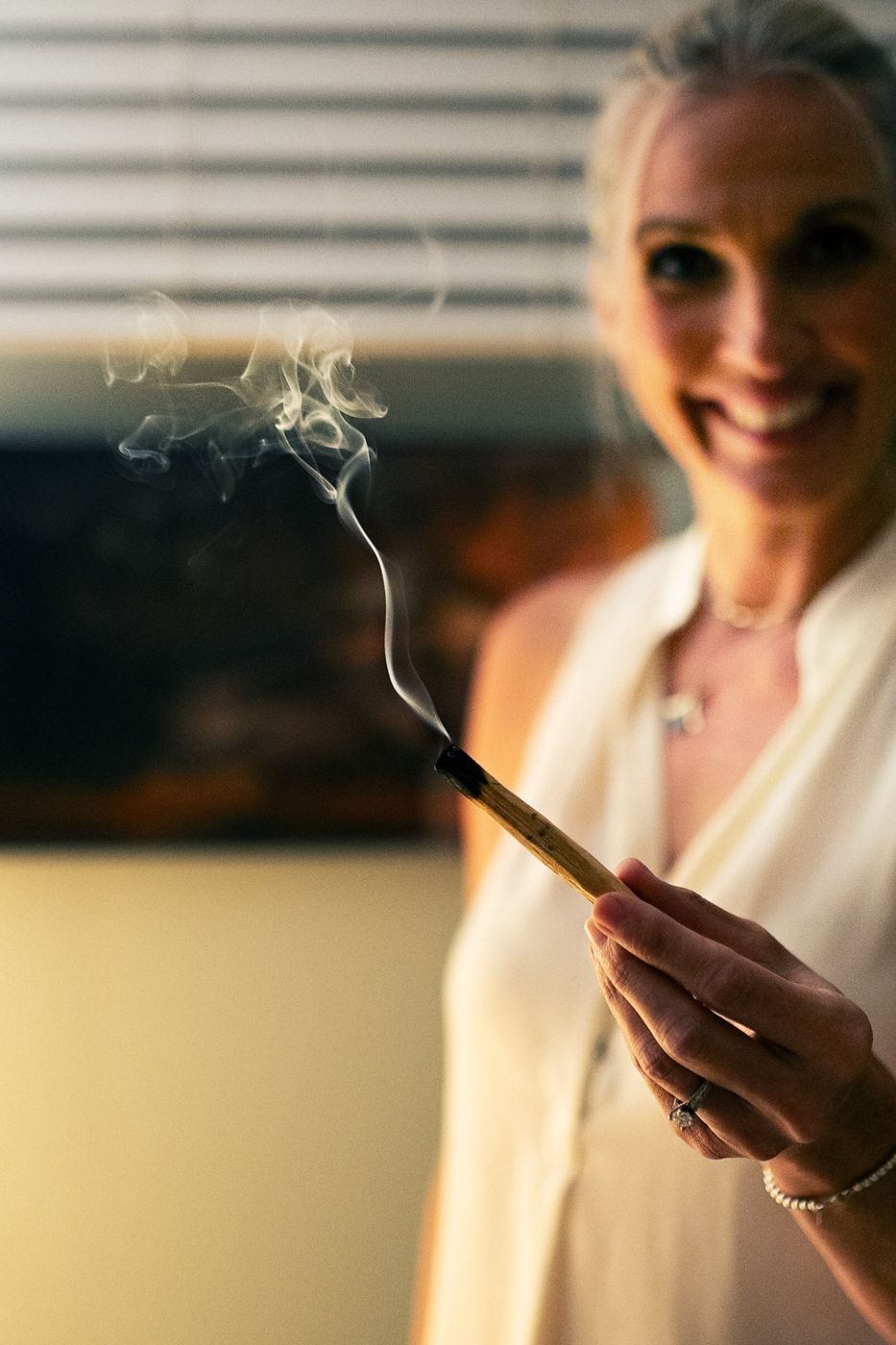
When we put attention into ourselves and into the sensations we’re having in the body, there’s a natural flow of emotions, beliefs, and thought patterns that comes up. When we can feel them, and have language to understand them, we have the ability to let them move through the body — instead of trying to manage or suppress the discomfort that’s happening.
That’s what this hour is for. Not solving anything. Getting familiar with how you work.
What this session is
Turning your attention inward
There’s no protocol and no fixed sequence. What there is, reliably: your attention, my questions, and a lot of quiet.
You sit — in a chair, not on the table — and put on an eye mask. Nothing about this session involves hands-on work. If you want bodywork, that’s the 90-minute session.
The work is observation, not analysis. You’re not there to figure out what something means. You’re there to notice what’s actually happening in your body while it’s happening.
What the hour looks like
How the hour unfolds
First, about five minutes of focused breathing
Settling in. Nothing complicated.
Then a body scan
Starting at the top of your head and moving down, or starting at your feet and moving up. You’re looking for anywhere that feels tight, or constricted, or simply different from the areas around it.
When we find one of those places, we stay there
I’ll ask you to describe what you’re finding, and my questions are usually some version of these:
- Does it feel heavy?
- Does it feel like it’s pulling inward?
- Is there a color attached to it?
- Does it have a shape?
- Does the sensation start shifting and changing as you stay focused on it?
I’ll ask one question, let you answer, and then usually leave a few minutes of silence before the next one. Some sessions have more conversation in them, some have more quiet. It moves organically. This observation phase is most of the hour — usually thirty to forty minutes.
The last five to ten minutes, we talk about what happened
What came up — emotion, thoughts, beliefs, whatever surfaced. Then we’ll often land on one or two things for you to practice on your own between sessions. Frequently that’s five to ten minutes of focused breathing before bed, or doing a body scan by yourself and noticing the difference between having me observe you and doing it alone.
That last part matters to me. The point isn’t that you need me in order to do this.
Online
The same experience, from your own space
Some of the people I do this work with meet me online over Google Meet, and it runs the same way. A few things that help:
Headphones, if you have them. My voice lands better and there’s less in the room to pull your attention out.
An eye mask, if you have one.
Your phone on silent. An interruption partway through is hard to come back from.
A chair you can rest in, and a room where you won’t be walked in on.
Before the mask goes on, you’ll adjust your camera so I can see as much of your body as your space allows — that’s what I’m observing once you can’t see me. From there the hour is identical: focused breathing, the body scan, the questions, the quiet, and the conversation at the end.
Is this the right session for you?
When someone asks me which session to book, I ask them this:
What is your intention, or what is the outcome you’re hoping to have after we work with each other for the hour?
And then, usually, this:
Are you looking to create action steps in order to change things that are currently going on in your life? Or are you interested in getting an understanding of how your nervous system and coping mechanisms are wired in your body?
If it’s the first, book Coaching. If it’s the second, this is the session.
Both of them end with something to practice. The difference is where it points — coaching sends you back out into your life with steps to take, and this sends you back to your own body with something to notice.
60 minutes · $90
Seated. Eye mask. No hands-on work. In person in Millcreek, or online.
You’re welcome to book a single session. Most people find this work builds, so I usually recommend a package — 6 sessions at 10% off, or 12 at 15% off — but that’s a recommendation, not a requirement.
Monday, Tuesday, Thursday and Friday, 9 am to 5 pm. Wednesday, 9 am to noon. Saturdays by request.
Cancellation: no-shows are charged in full; cancellations with less than 24 hours’ notice are charged 50%.
I’m a Licensed Massage Therapist and a certified life coach. This work is not psychotherapy, and it isn’t a substitute for mental health care or medical treatment. If something surfaces that would be better served by a licensed mental health provider, I’ll say so.